
The North Devon Data Centre: Will It Achieve Planning?
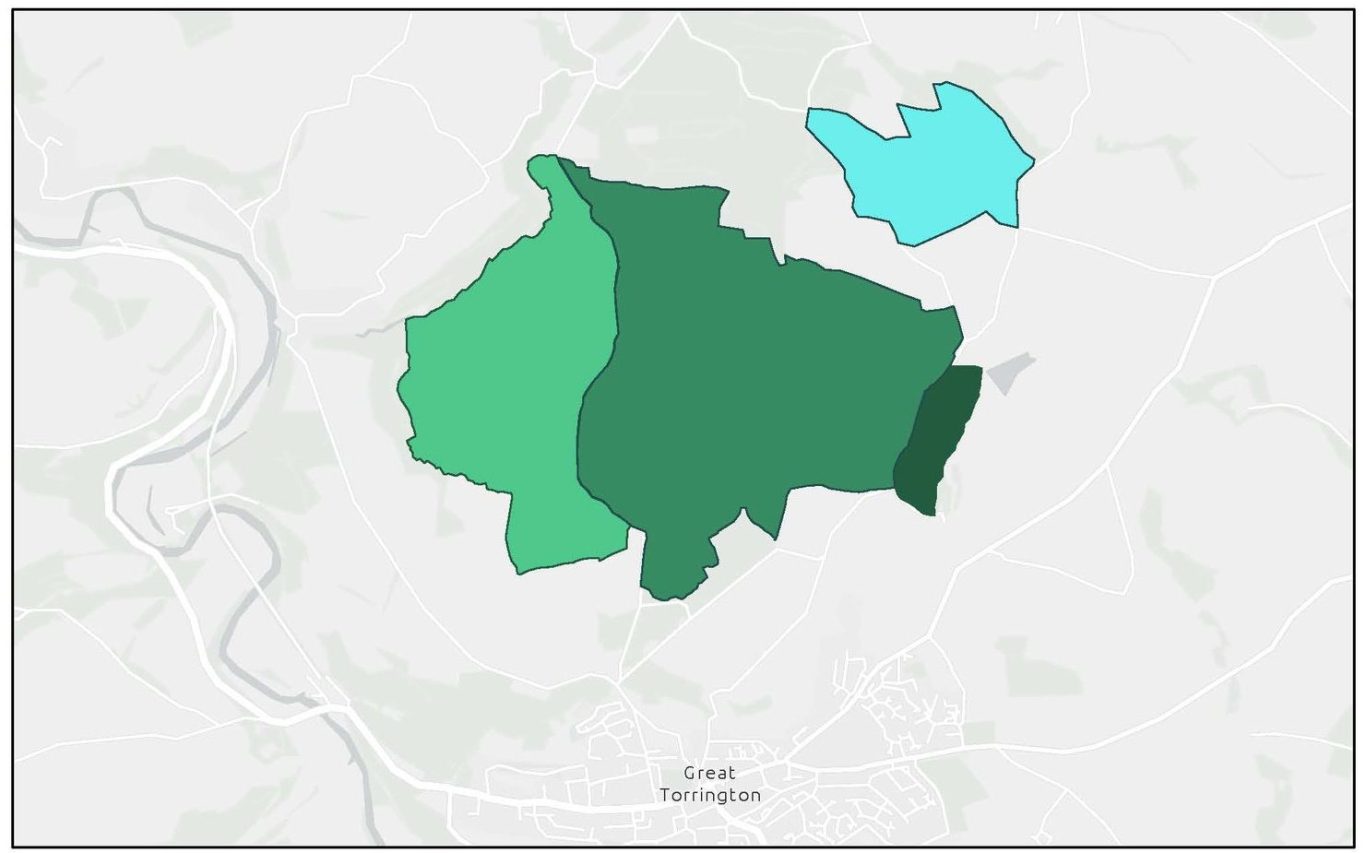
Credit: Xlinks via www.devondatacampus.com
Author: Cameron Robison
8th July 2026
The proposal for a large AI-focused data centre campus in North Devon has quickly become one of the most significant development discussions in the South West. Promoted by Xlinks as the “Devon Data Campus”, the scheme would reportedly provide up to 1.5GW of AI computing capacity alongside a 1.8GW battery energy storage system, representing investment measured in billions of pounds and placing it amongst the largest data centre developments proposed anywhere in Europe, with a proposed footprint of 850 acres.
While public debate has largely focused on whether the project should proceed, from a planning perspective the more relevant question is whether such a development could realistically obtain planning permission. As always with planning, the answer is neither a simple yes nor no. Instead, the proposal presents a mix of considerable opportunities and equally substantial challenges that would need to be carefully addressed through the development management process.
Working in the proposal's favour is the growing national importance of digital infrastructure. Data centres are now designated by policy as ‘critical national infrastructure’; they support cloud computing, artificial intelligence, financial services, healthcare, communications and public services. The UK Government has repeatedly emphasised the strategic importance of digital infrastructure to national economic growth and technological competitiveness. Consequently, the applicant is likely to argue that the scheme delivers benefits extending far beyond North Devon and contributes to broader national objectives surrounding AI capability and digital resilience.
The economic case may carry considerable weight. Xlinks has indicated that the development could generate thousands of construction jobs, hundreds of permanent operational roles and billions of pounds in economic activity over its lifespan. In planning terms, economic growth remains a core objective of the planning system, and local authorities are generally expected to support sustainable economic development where adverse impacts can be appropriately mitigated.
However, economic benefits alone rarely determine planning outcomes, particularly for schemes of this scale. And economic benefit certainly doesn’t answer the question on most locals lips, ‘why here?’. Location remains perhaps the most significant planning challenge. The proposed site sits within the North Devon countryside between Great Torrington, Huntshaw and Weare Giffard, rather than within an established industrial or employment area. Various reports indicate that the overall site extends across approximately 850 acres, with several very large buildings potentially reaching around 40 metres in height.
For local planning authorities, the principle of major industrial development in a predominantly rural landscape immediately raises questions regarding landscape character, visual impact and spatial strategy. Planning policy generally seeks to direct large-scale commercial development towards sustainable locations where infrastructure already exists and where impacts on the countryside can be minimised. The applicant would therefore need to demonstrate why this particular site is necessary and why alternative locations would not be capable of accommodating the development.
Landscape and visual effects are likely to become a central area of scrutiny. Torridge is widely recognised for its attractive rural environment, and the introduction of multiple large-scale industrial buildings could fundamentally alter the character of the surrounding area. An Environmental Impact Assessment would certainly be required, with detailed landscape and visual assessments examining views from settlements, public rights of way and surrounding countryside. Whether these impacts are considered acceptable would ultimately depend on the scale of harm identified and the effectiveness of proposed mitigation measures such as landscaping, screening and design interventions. The current location justification is based on; cooler temperatures, local renewable energy generation, highly reliable grid connections and natural screening.
Infrastructure capacity represents another critical consideration. Data centres are unusual developments because their primary impacts are often less visible than those associated with housing or manufacturing. Instead, they require significant electricity supplies, robust telecommunications infrastructure and, depending on the design adopted, potentially substantial water resources for cooling systems. Local planning authorities and statutory consultees will inevitably examine whether existing infrastructure networks can accommodate these demands without creating wider constraints for homes, businesses or public services.
Water availability may prove particularly important. As AI computing expands, concerns over water consumption and cooling requirements have become increasingly prominent in planning discussions relating to data centres globally. With climate trends increasingly taking us to longer, dryer summers and shorter, wilder winters, water resourcing options are really feeling the pressure. Although modern cooling technologies can reduce water demand considerably, water supply, wastewater management and environmental impacts on local catchments would likely form key elements of any planning assessment. Water companies, environmental regulators and lead local flood authorities would all have an interest in understanding the long-term implications of the development. This will almost certainly be a key point of contention for the proposal and we look forward to seeing how the developer plans to overcome potential requirements placed on them.
The associated battery energy storage system introduces an additional layer of complexity. Battery storage can support grid resilience and help manage fluctuations in electricity demand, which may strengthen the strategic case for the wider project. However, battery installations also generate planning considerations relating to land take, landscape impacts, fire safety, emergency response arrangements and operational management. These matters would require detailed technical evidence and consultation with specialist agencies before any planning authority could make an informed decision.
Agricultural land use is also likely to feature prominently during the planning process. Reports suggest that parts of the site include Grade 3 agricultural land. National policy encourages decision-makers to consider the economic and environmental value of agricultural resources, particularly where development could result in a permanent loss of productive farmland. While this issue is unlikely to be decisive in isolation, it would contribute to the overall planning balance.
Ultimately, the planning feasibility of the North Devon AI data centre will depend on whether the applicant can convincingly demonstrate that the benefits outweigh the adverse impacts. The proposal appears capable of delivering substantial economic investment, employment and nationally significant digital infrastructure. At the same time, its scale, rural location and infrastructure requirements create legitimate planning questions that will require rigorous assessment.
At this early stage, it would be premature to conclude either that the project is destined for approval or that it is fundamentally unsuitable. What can be said with confidence is that the proposal will be tested against a wide range of planning considerations, including landscape, infrastructure, water resources, environmental effects, agricultural land use and economic development objectives. The eventual outcome will likely depend not only on the scale of the perceived benefits, but on the quality of the evidence presented and the extent to which impacts can be effectively mitigated.
As such, the proposal represents a valuable case study in how the planning system seeks to balance technological advancement and economic growth against environmental protection and the stewardship of rural landscapes in an increasingly digital age. It is fair to say we will be keeping a close eye here to see how this story progresses.